Talk today : 6 AUG 1945, When All Watches Stopped in Hiroshima


Wall posters were commonly plastered on buildings across Hiroshima, urging the Japanese people to have hope and stand ready to fight for their nation. Hiroshima was a vital transport and logistics hub for weaponry in Japan; driven by duty, the city’s inhabitants worked toward a goal of guiding the nation forward. Yet, the light that arrived on the morning of August 6 was a blinding, insurmountable light of despair. Within minutes, within a 120-meter radius of the hypocenter, structures were instantly obliterated by the blast and vacuum suction. Those within a radius of 800–900 meters suffered physical effects from the heat and radiation, with their internal organs ceasing to function, leading to death within 1–2 days.
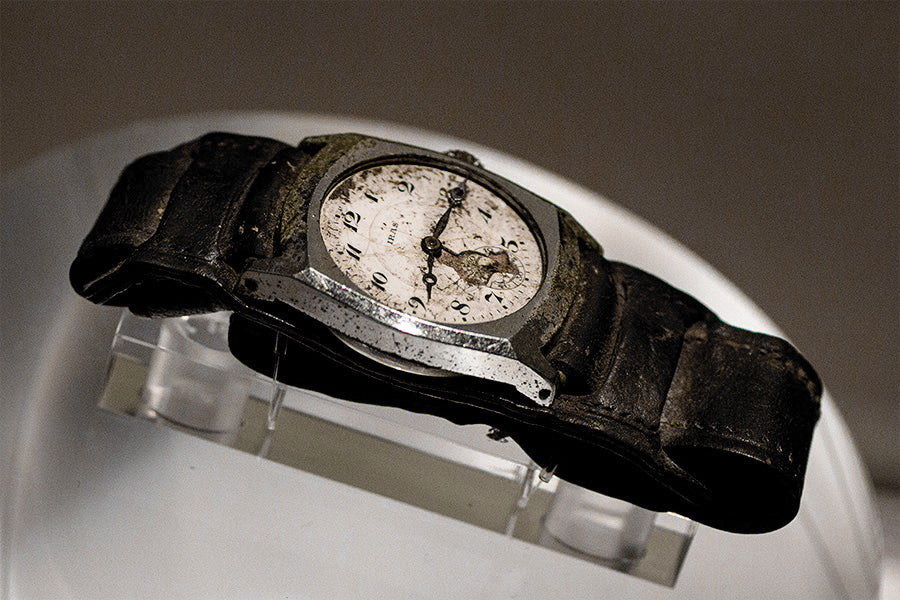
Mr. Kawagoe, an active-duty officer hiding in a secure location at the Futaba-no-Sato military camp, 1.1 miles (1.8 km) from the Hiroshima hypocenter, was hit by the blast wave. The watch on his wrist was struck by the impact and stopped at that very second. Amidst the ruins of Hiroshima, there remained watches that still retained their form, though reduced to charred remnants, all frozen at the exact moment of destruction.

At 8:15 a.m. on August 6, 1945, the moment the bomb was dropped, scenes of chaos unfolded for those affected by the radiation. The desperation of a bustling city reduced to flat, barren rubble—these stopped watches have recorded the events as the beginning of the end of World War II. Following this, a second bomb claimed hundreds of thousands of lives in Nagasaki on August 9. Five days later, the Emperor of Japan signed the treaty and announced surrender to the United States, marking the end of World War II.

Source
- https://oncamouflagedwings.org/atomic/atomic3.htm
- https://museumbackpacker.wordpress.com
- https://rarehistoricalphotos.com/hiroshima-atomic-bombing-1945/