12 Golden Rules of The Geneva Seal: The Standard for Luxury Watchmaking
In our previous article, we took watch enthusiasts on a journey through the history of The Geneva Seal, a prestigious hallmark in the luxury watch industry. Today, we will delve into the 12 ironclad rules of The Geneva Seal, which have become a global standard for trading high-end brand-name watches. Any watch brand that receives this hallmark is undeniably guaranteed superior quality.

The 12 Ironclad Rules of The Geneva Seal
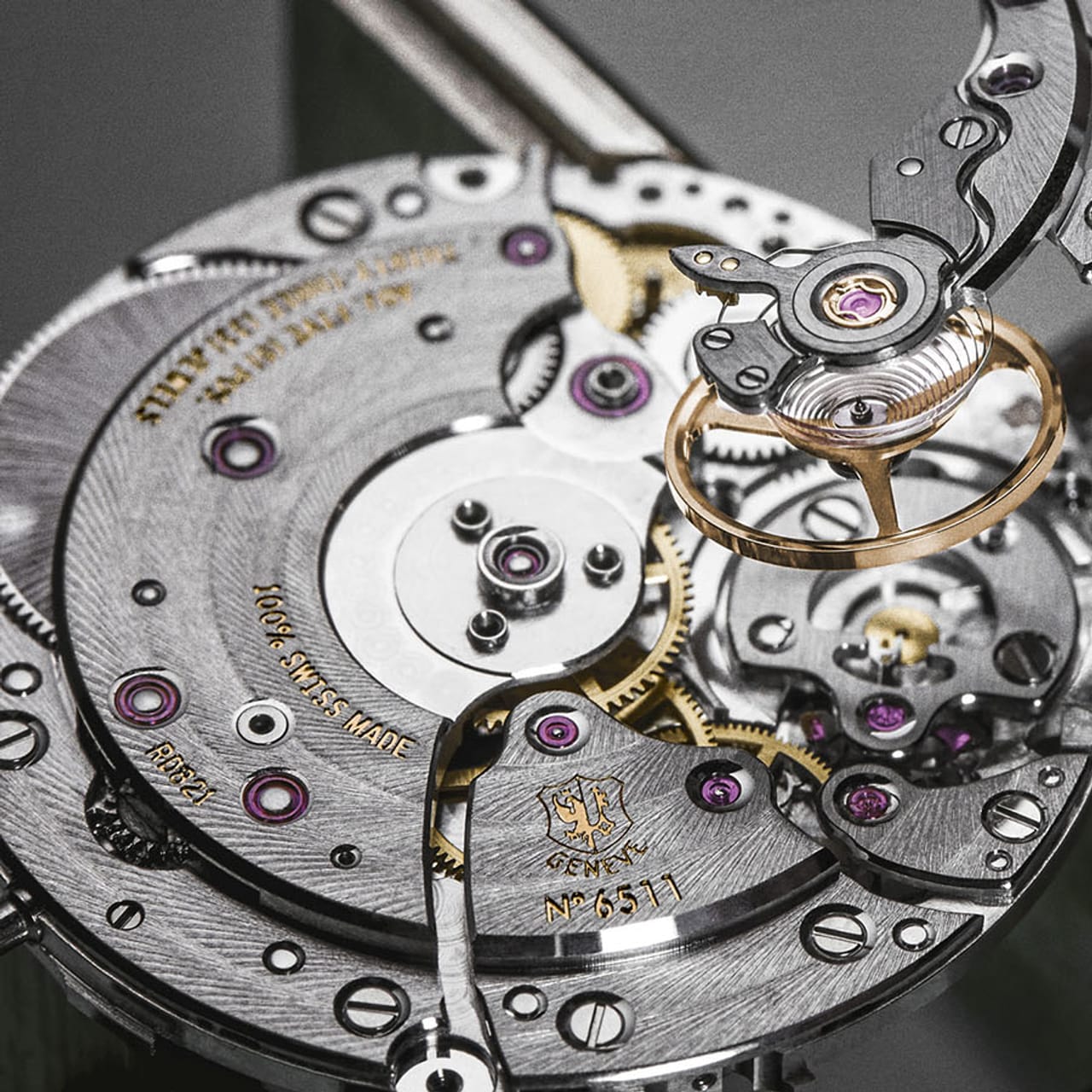
- The craftsmanship of the movement components, including all additional mechanisms, must comply with the watchmaking standards set by the Geneva Laboratory of Horology. Metal parts must be polished, visible surfaces must be smoothed, screw heads must be polished to a shine, and screw slots must be chamfered and polished.
- All movement parts in the gear train and escapement must be fitted with jeweled bearings. These jewels must be olive-polished. For the bridges, the jewels must be half-hardened, and the jewel settings must be polished to increase durability. It is not necessary to polish the settings for endstone caps.
- The hairspring should be fixed in place with a stud that has a rounded collar and head; a movable stud carrier is permitted.
- Hands must be fitted with a collet, except for ultra-thin mechanisms, which do not require a collet system.
- Variable-radius balance systems are permitted, provided they comply with regulations.
- The gear wheels must have their angles polished on both top and bottom. For wheels 1.5mm or thinner, polishing the bridge side only is permitted.
- When assembling the gear train, such as pivots and pivot surfaces, space must be provided for polishing.
- The gear system must be lightweight and no thicker than 0.16mm. For large movements, it must not exceed 0.13mm. For movements thinner than 0.18mm, the locking surfaces must also be polished.
- The click must be controlled by a fixed guard to separate the pins or studs from one another.
- Movement parts that must be fitted with shock-absorption systems are permitted.
- Ratchet wheels and crown wheels must be finished according to registered models.
- Wire springs are not permitted.
Testing Procedures Prior to Awarding The Geneva Seal

Because every mechanism is a crucial component of a perfect timepiece, even the smallest or most delicate part like a watch hand, the Geneva Laboratory of Horology has partnered with TIMELAB, an expert in timekeeping instruments, to ensure that the watch functions efficiently, not just in its flawless exterior appearance. Naturally, this testing elevates the trading of brand-name watches to another level, allowing buyers to be confident that the price paid is worth what they receive.
TIMELAB's inspection consists of detailed and meticulous steps, ranging from water resistance, timekeeping accuracy, power reserve, and the unique functional features of each individual watch.
Water Resistance
In the water resistance test, each watch is tested starting at a base level of 3 bar, which is sufficient for wearing the watch while washing hands or walking in the rain. If a manufacturer claims a higher water resistance level, it will be tested accordingly. In addition to water resistance, the watches are also tested at an air pressure of 0.5 bar to simulate air travel.
|
Bar is a unit of pressure. For watches with a water resistance system, 3 bar = 30 meters.
|
Although in reality, selling brand-name watches does not require water resistance to obtain The Geneva Seal, if TIMELAB tests a watch and finds it is not water-resistant, this will be clearly stated on the certificate.
Timekeeping Accuracy
Before starting the timekeeping test, each brand must acknowledge that the watch will be tested under various scenarios and more than once over a period of more than 7 days to determine how it performs in actual wear. If it is a chronograph, it will be tested for continuous timing for 24 hours.
Beyond timekeeping, if a watch has a calendar function, it will be set to display the time during a leap year, or a year where February has 29 days, to test more complex displays.
Power Reserve
The final step of the test is the power reserve, to see whether the watch can hold a power reserve according to the standard or higher than what each brand has specified. Naturally, if it is a chronograph, it will be tested to see how much power is consumed when timing continuously.
Engraving the Prestigious Hallmark
After passing all these detailed and lengthy tests, any timepiece that qualifies will be issued a certificate and awarded the prestigious Geneva Seal to confirm its superior performance.
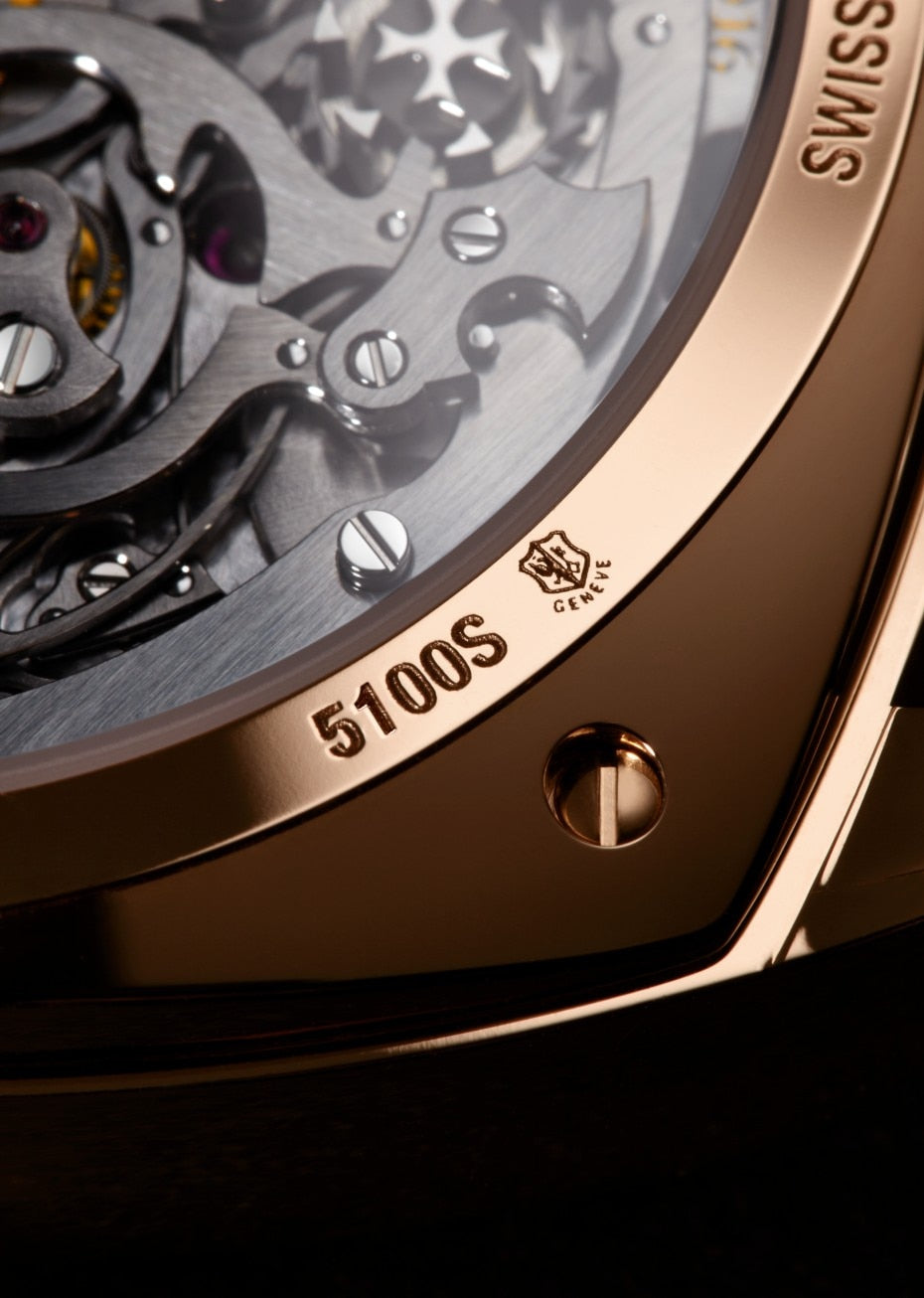
However, this hallmark cannot appear just anywhere; the location must be approved by the manufacturer, and if possible, it will be placed near the serial number. Furthermore, each brand must use a movement certified by TIMELAB.
Previously, The Geneva Seal was applied by stamping or engraving, but in 2014, it switched to acid etching to prevent damage to the watch case that could occur from engraving tools. Currently, engraving methods have been developed to prevent counterfeiting and substandard trading of watches by hiding The Geneva Seal in a spot that only a master craftsman can see.
All of this is the story of the 12 ironclad rules of The Geneva Seal, born from an intention to elevate the high-end watch industry to another level with high standards. If anyone is interested in owning a luxury watch certified by this prestigious hallmark, Pixiu Watch is a shop that buys and sells high-end watches, collecting magnificent timepieces to deliver emotional value to enthusiasts for exchange and collection. We are happy to provide consultations and advice on timepieces from various famous brands to deliver beauty to all watch lovers. You can contact us at 083-713-9292 (Oat) and 081-535-3595 (Tee) every day from 7:00 AM to 12:00 midnight.