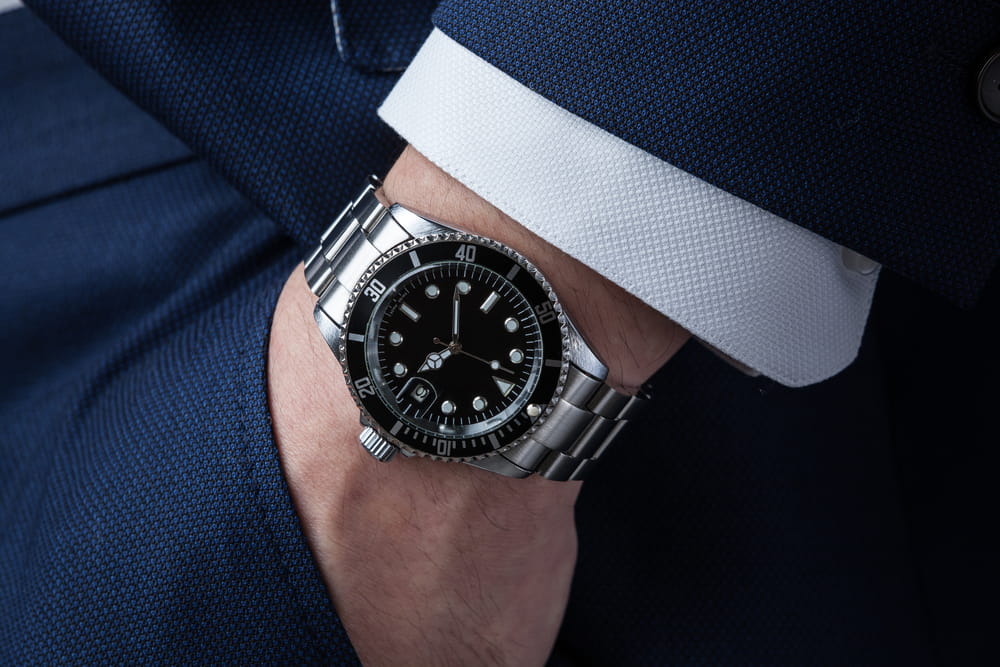
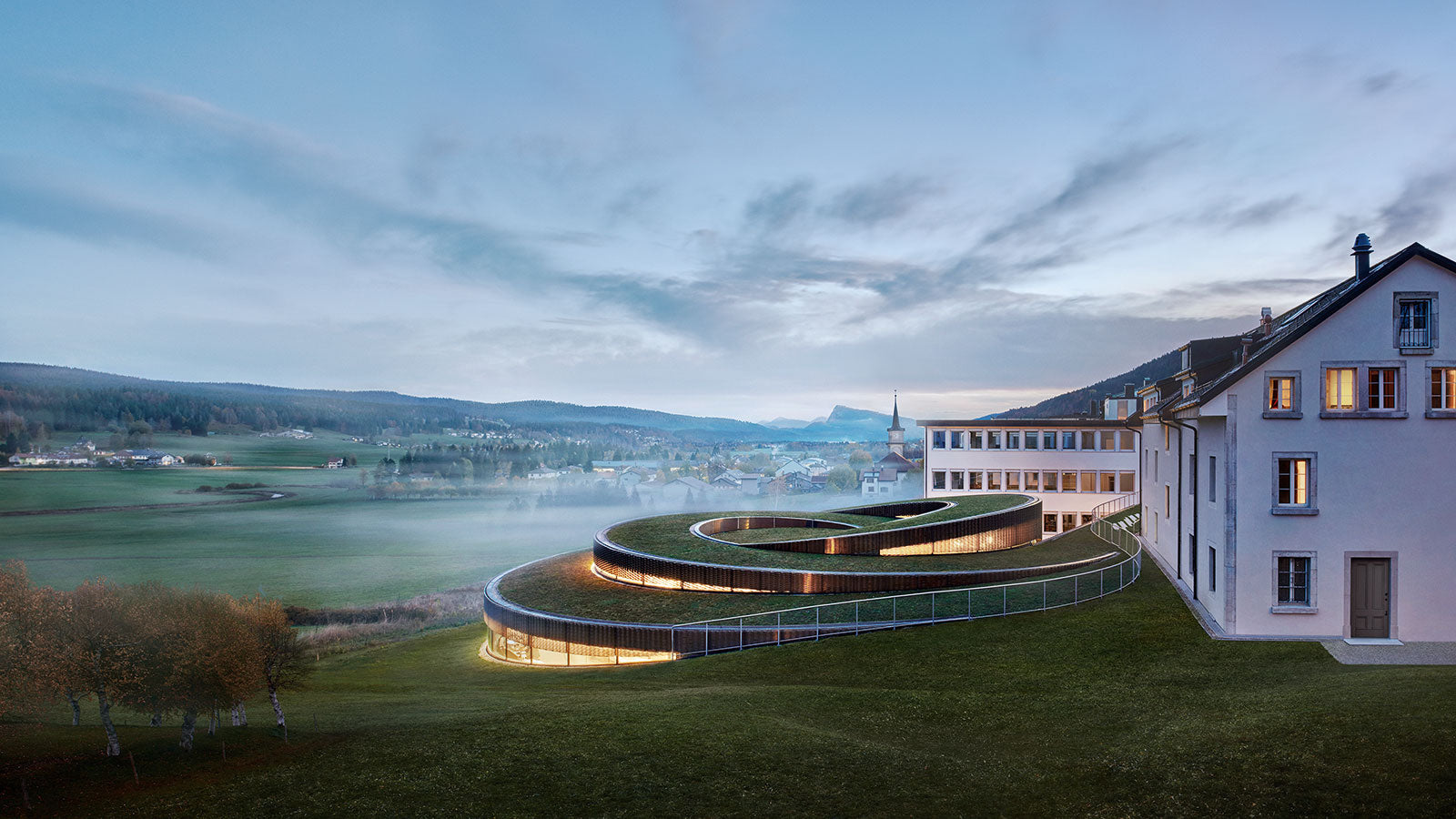
Audemars Piguet, a master of crisis management.
François-Henry Bennahmias was born in Paris. After a five-year career as a golfer, he decided to seek a new challenge in the luxury goods industry. He worked with several brands, including Giorgio Armani, Gianfranco Ferré, and others, before joining Audemars Piguet in 1994. Within less than three years, he was promoted to Brand Manager for Singapore, with oversight of markets in France, Germany, Italy, Spain, Switzerland, Brunei, Australia, and Malaysia. In 1999, he became Managing Director of Audemars Piguet Inc. (North America) in New York to develop the brand across the Atlantic, until he became the Global CEO of Audemars Piguet in 2012, a position he has held ever since.
 The severe situation of the COVID-19 pandemic has forced us to adapt our way of life to cope with the crisis. EY invited various prominent figures to share their vision for how life should be moving forward. François-Henry Bennahmias, global CEO of Audemars Piguet, was one of those who shared his insights. Let's see how he handled his work and responsibilities during the lockdown.
EY: Do you still remember the initial impact this crisis had on your company?
Bennahmias: Of course, I remember it very well. We were in the middle of a workshop when we received a call about the first infection in the company. We had to stop the workshop immediately, and within 48 hours, the company was temporarily closed on March 18th. By March 21st, I had communicated all the necessary measures to every employee to ensure the company could survive this emergency.
 EY: What is your take on the current situation?
Bennahmias: Things will definitely be different from now on. There are both pros and cons to this COVID-19 world. On the bright side, as someone who always sees the glass as half full, I think this crisis will make people more health-conscious and drive the continuous development of new initiatives and innovations.
EY: How did you prepare for this challenge?
Bennahmias: I think we were well prepared. We only had 48 hours to temporarily shut down our offices and factories in Switzerland. While closed, we maintained regular contact with our strategy team. Even now, as we have reopened partially, production capacity is limited. We expect production to decrease by about 20-25% from 2013 levels, with sales equivalent to 2017. Global sales trends are following our projections. That is the answer to your question, and I can say we did quite well.
EY: How much has this crisis impacted your meeting agenda?
Bennahmias: I am more concerned with the philosophical aspect of this question. We are ready to handle the practical side; for example, when watch production drops from 40,000 to 25,000 units, we know what to do. Operationally, this crisis is easy to manage, but philosophically, the important question is when and how it will end. In the third week of the lockdown, I received a weekly video from our employees asking their children, regardless of age, what the world should look like after COVID. Whether it was drawings, videos, or emails, everything was about love. They missed hugging their families, including their grandparents. It was an expression of the human essence. Three days later, I had an idea: what if we incorporated people's expectations into our business? How would the company change? One thing I can tell you is that the world of watchmaking will shift to “B to L” (Business to Love), alongside the “P to P” (People to People) business approach we were already implementing. This is because in the luxury goods market, 99 out of 100 customers want an emotional connection, or at least half of what they desire. We are the same. That makes it necessary for us to learn how to handle customer relationships that are constantly changing.
 EY: How has your way of working changed since the lockdown?
Bennahmias: I have a better life now. I don't have to face jet lag from traveling, and I have time to exercise and eat on time, which is very good for my health. There are three things I realized from this lockdown, which surely wasn't a coincidence. First, overworking is counterproductive. I feel bad every time I see people working so hard that they forget what they are doing and why. We should learn to prioritize what is truly important. For two years now, I haven't sent emails after 6:00 PM or on weekends. I read in Netflix's corporate culture to trust your employees; the more people you trust, the more credibility you have. We started remote working with our staff, and that led to such good results in 2019 that we were able to pay employees 14 months of salary even in a crisis year like this. This has triggered more confidence, and employees have said in unison that they are happy.
EY: What do you miss from the pre-crisis era?
Bennahmias: Just not being able to see my two daughters in the United States. Other than that, nothing—especially traveling, which I don't even need to mention.
EY: People say every crisis is an opportunity. Do you agree?
Bennahmias: Every crisis has both good and bad aspects. As I said before, I see things as a glass half full, which makes me look at everything in a positive light.
EY: What is the most valuable lesson you have learned from this situation?
Bennahmias: To have love for those around you. I believe in this.
EY: Based on what you have learned today, what would you tell yourself back in 2019?
Bennahmias: Be prepared, because whatever you think might happen, it will eventually happen. And be resolute, because the road ahead is not easy!
EY: Could you summarize your new way of life?
Bennahmias: Our duty is to pass on knowledge to ensure that fine watchmaking remains in Switzerland for the next 20, 30, or 50 years. In Japan, master craftsmen are supported by the government through grants in exchange for passing on their knowledge. Similarly, whenever people think of watches today, they must think of Switzerland, and that is why watchmaking craftsmanship should be preserved.
EY: How has the crisis caused rapid change within the company?
Bennahmias: We have restructured the organization with a focus on health to respond to what employees need. We had plans to build a large building for everyone to work together, but now we are rethinking that plan, and I am spending most of my time talking to young people to gather ideas for the future.
EY: How do you handle this new responsibility?
Bennahmias: In the middle of a storm, everything depends on the captain's attitude. If the captain does not panic and remains confident, the crew will feel it and continue to navigate. Likewise, no matter how difficult 2020 may be, this ship will keep sailing without stopping.
 EY: Do you have any message for other CEOs?
Bennahmias: We all need to learn from one another. We must try to adapt to things we have never known before. We must “learn how to learn.” Humans do not like change, but humans have the ability to adapt, and we all need that!
______________________________________________
Interview reference
: https://www.newrealityblog.com
Images
: https://www.audemarspiguet.com/en/
: https://www.europastar.com/time-business/
: https://watchesbysjx.com/2020/04/
: https://www.europastar.com/the-watch-files/resilience/