
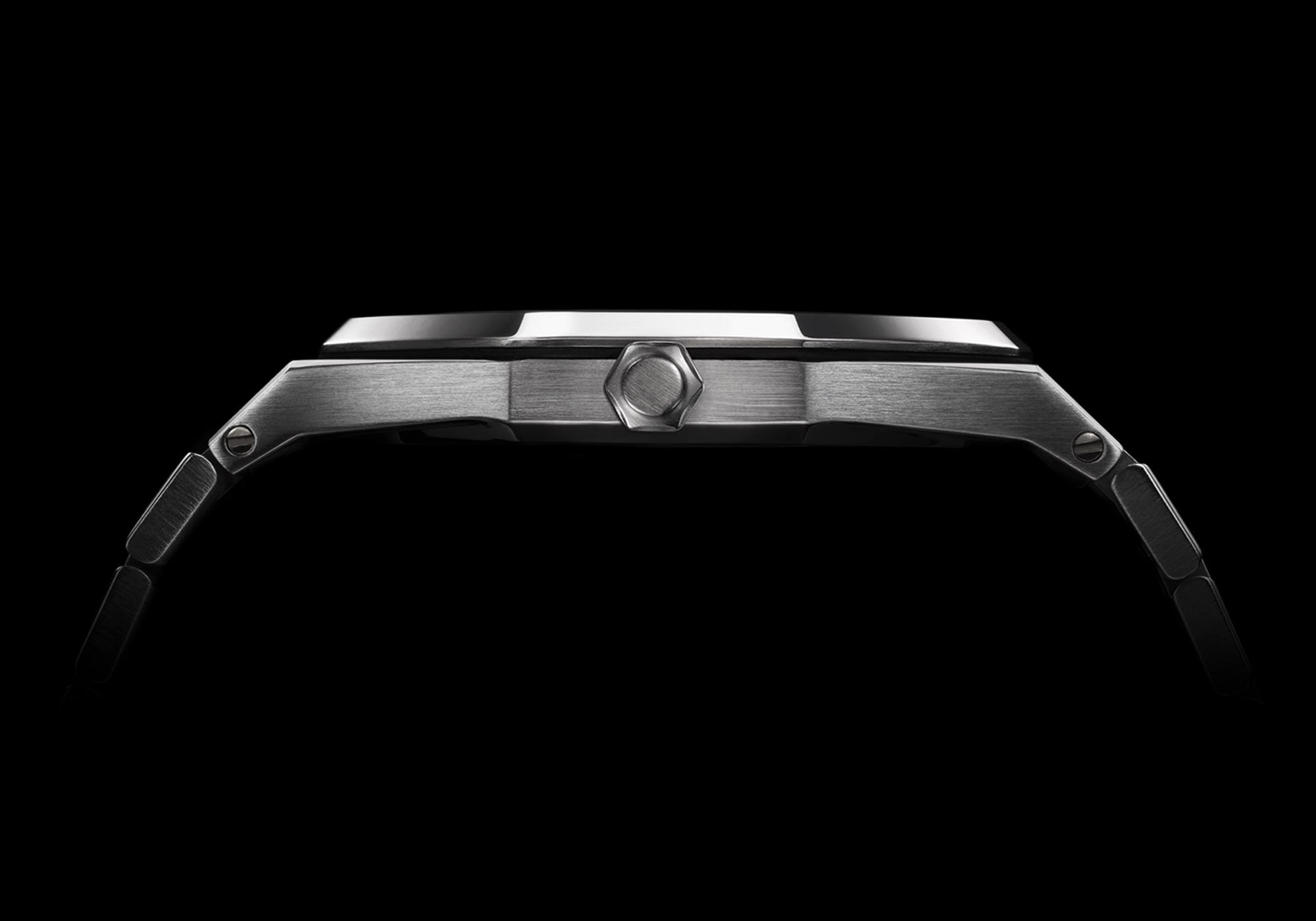
AP Chronicles Series EP. 3: The Creation of the AP Royal Oak
The Audemars Piguet Royal Oak watch case is an aesthetic and technical masterpiece, combining an octagonal, circular, and ultra-thin tonneau shape with water resistance. Naturally, achieving this design was no small feat. This article will take everyone back in time to explore the path of that refinement and meticulous craftsmanship together.
Traditional Case Structure
What is the case structure of the AP Royal Oak 5402, often referred to as a "monocoque"? In the book The Illustrated Professional Dictionary of Horology by Albert Berner, published in 1961, it is explained that a watch case serves two functions: first, to protect the delicate watch movement from dust, humidity, and shocks; second, to provide the most attractive appearance possible, according to the trends and tastes of the society of that time.

Typically, a wristwatch case consists of three main components layered together: the case back, the case middle, and the bezel. Rubber seals installed between each layer enhance water-resistance performance. This structure is dubbed a "three-piece" case. While Albert Berner did not define the "monocoque" case, he introduced another category: the "two-piece" case, where the lugs and the center of the case are integrated into one. This structure reduces the risk of moisture penetration, increases the rigidity of the case, and sometimes allows for a thinner profile, while still providing access to the movement through the back of the watch.
For Audemars Piguet watches, "two-part" structures are common in watches produced during the 1920s, which were Art Deco-style rectangular timepieces. Many of these are detailed in the book Audemars Piguet’s 20th Century Complicated Wristwatches.
Before 1982, in the AP Pre-Model 182, the bezel blended with the case center for aesthetic reasons, and the case back opened via a hinge. Thirty years later, the bezel of the 5115 model appeared to separate from the case center, yet it remains a crucial part that enhances water-resistance performance.

Is it truly a MONOCOQUE?
Etymologically, "monocoque" means "single shell." Literally, it refers to a tightly sealed watch, much like an eggshell or a hazelnut shell. According to information provided in The Theory of Horology, published in 1998 and used to train watchmaking students at Swiss technical schools, a monocoque case is defined as one where "the bezel, case middle, and case back are one single piece."

Consequently, this definition strongly impacted those watchmakers because the case back could not be removed; therefore, the movement was inaccessible from the back and had to be extracted through the dial side. Furthermore, there was no distinct bezel, so the crystal had to be removed for greater flexibility and was made of a material called Plexiglas. Conversely, the watchmaker had to be able to remove the crown before extracting the movement. Thus, the winding stem was in two parts: the first part was part of the movement, and the second was the winding button that was screwed tightly into the first. Once the movement was in place, a firm pull on the crown would allow the watchmaker to release it from the "broken" stem and pull it out.
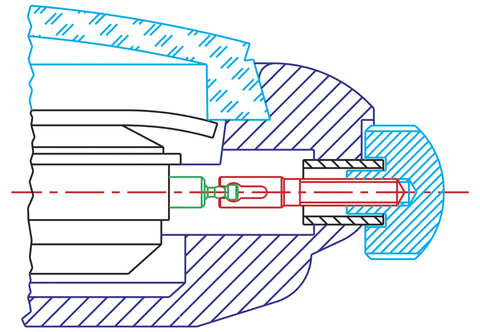
Watch manufacturers of this group applied the monocoque definition to create several diving watch cases, particularly those by Seiko, Mido, Omega, and many other brands. However, almost all of them featured an external rotating bezel, so they did not strictly fit the term "monocoque" completely. Nevertheless, this definition should be broadened, as the term applies only to the case back and middle section being integrated into a single component.
Therefore, based on this extended definition, the structure of the first Audemars Piguet Royal Oak bears a resemblance to a monocoque case because the back and the middle of the case are the same component. Martin K. Wehrli, the former director of the Audemars Piguet Museum, mentioned this in a document published in 2012 to celebrate the 40th anniversary of the Royal Oak, where he acknowledged that it only partially meets the definition.

"Is it a genuine monocoque case? It cannot be answered with a simple 'yes' because the glass is not integrated into the case, and the bezel is separate. We can state that the glass is indeed sapphire crystal. Despite these limitations, we will follow the practices of collectors and watchmakers by using the term 'monocoque' only for Royal Oak cases that integrate the middle section of the case and the case back."

For Authentic AP Watches, Visit Pixiu Watch
The story of the Royal Oak case creation is only partially covered here. Stay tuned for the next part in the upcoming article from Pixiu Watch. If you are looking to own an authentic AP Royal Oak, visit Pixiu Watch. We are a pre-owned designer watch store that curates every precious timepiece, allowing you to discover the right charm with the beautiful watch you desire, accompanied by professional consultation and advice from those who have long understood the passion of collectors.
For further inquiries, please contact us at 096-939-9292 (Oat) any day during business hours.
References
- THE FIRST ROYAL OAK CASES. Retrieved March 16, 2023, from https://apchronicles.audemarspiguet.com/en/article/the-first-royal-oak-cases